My Dream -- Written in 2013 Before Senior Year of High School
YoungForest · https://youngforest.github.io/en/2013/06/07/My-dream-when-3rd-years-in-high-school/
June 7, 2013 was the last day of the Gaokao for the senior students one grade above me in high school.
From that day on, I was the one closest to the Gaokao, although I would not officially enter senior year until September.
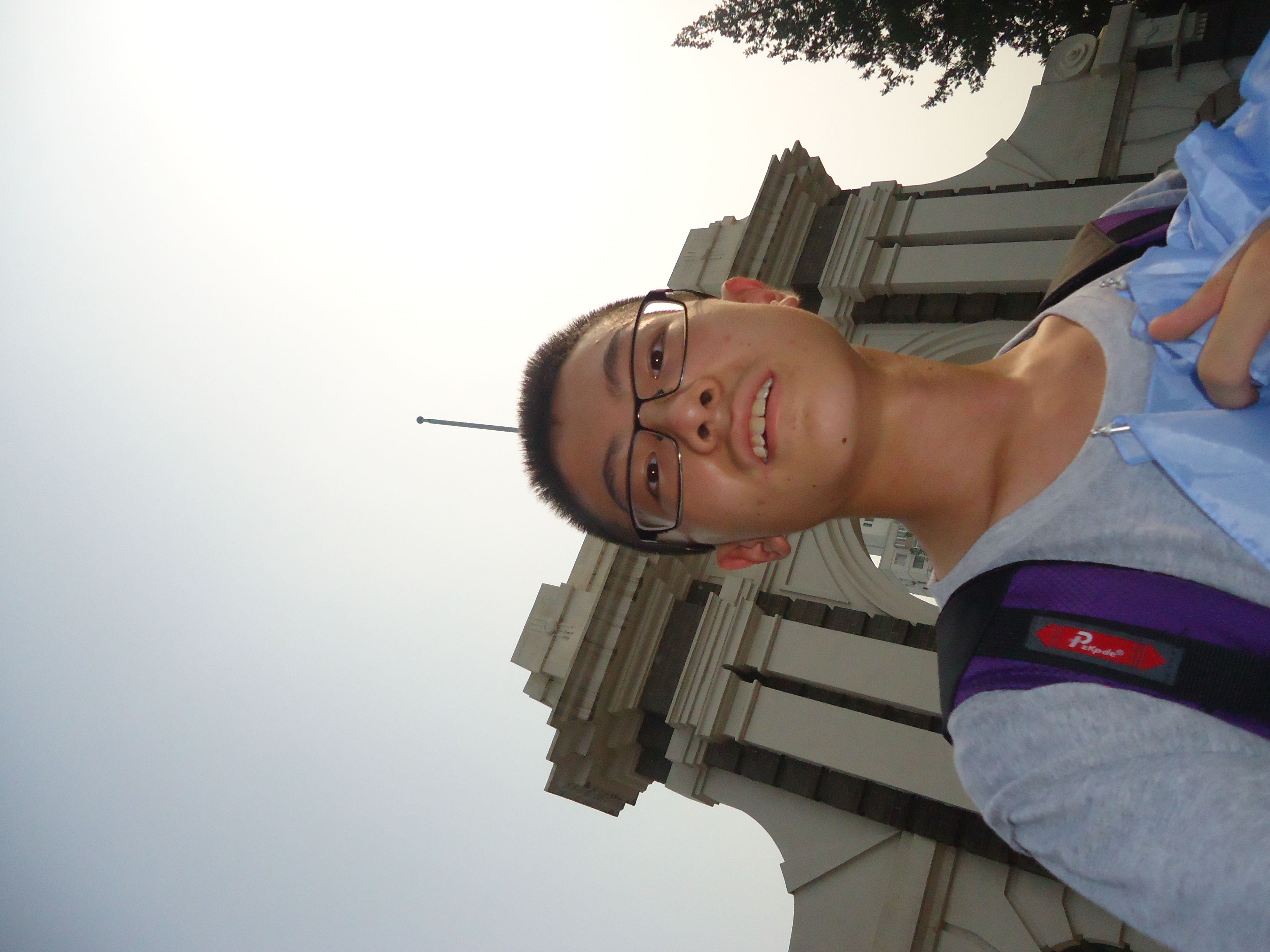
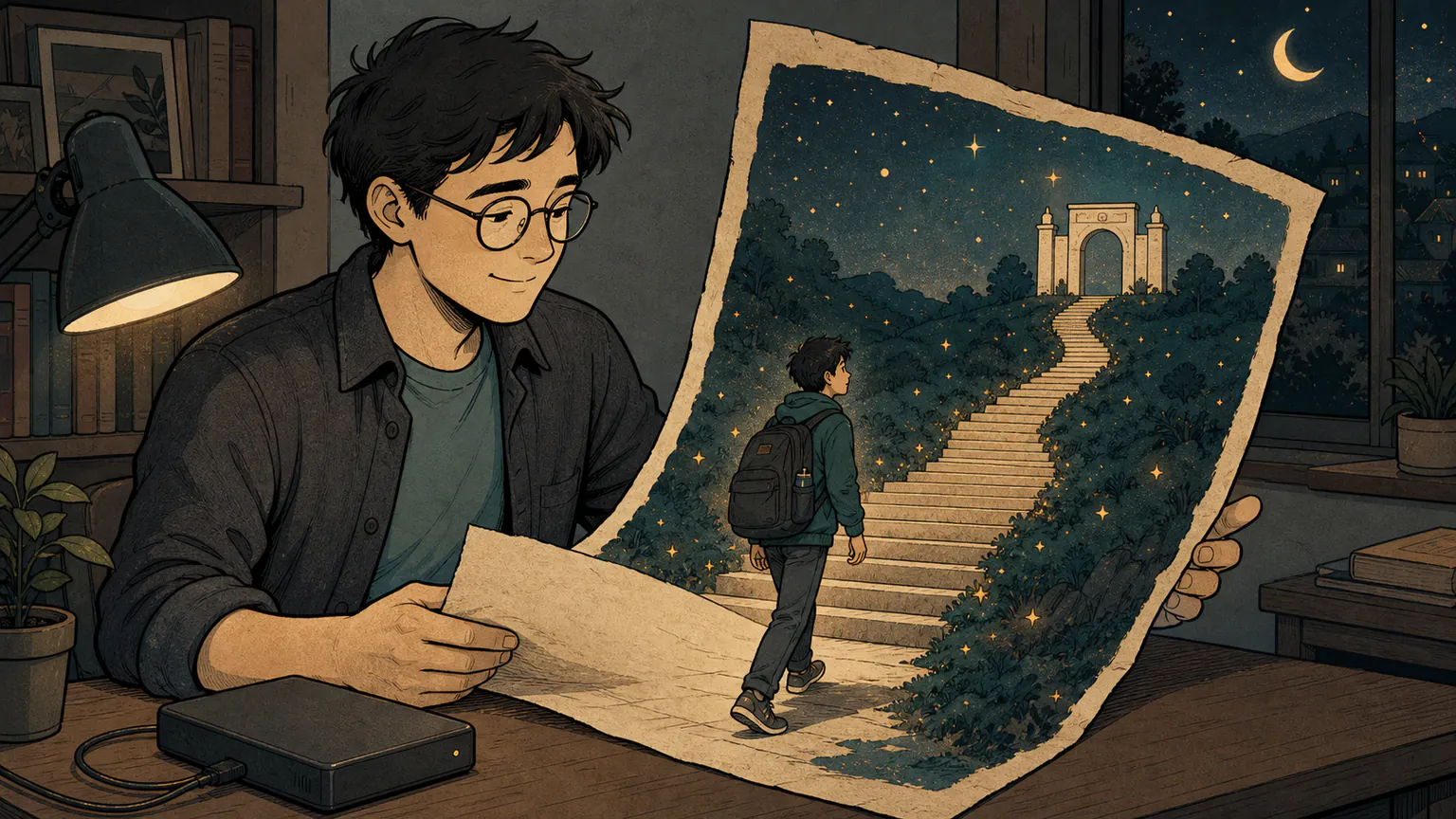
At the time, I was studying at Xiangfen High School in Shanxi Province. I was not yet 17, and I wrote this “My Dream” to state my ambition and encourage myself. Now ten years have passed. In June 2023, while organizing files on my hard drive, I was pleasantly surprised to discover this “document.” Looking back, I did not realize my Tsinghua dream back then. After being beaten by society, my ideals, including my literary talent, are far from as excellent as they were then. But the words from that year still move me. I thank my former self.
I was once a young man.
Main Text Begins
At fifteen, Confucius set his heart upon learning, thus establishing the life ideal he would pursue for the next several decades without wavering. Although I am not a sage, only an ordinary middle school student, I also have my own life ideal: that the world changes because of me. When later generations hear my name, they will raise their thumbs and offer sincere praise, just as I do now when I hear the names of great people like Einstein.
I thirst for truth like a bleating lamb thirsts for milk, never forgetting exploration for even a moment. The stories of great people deeply attract me: Archimedes’ bathtub, the apple that hit Newton’s head, the kettle lid seen by Watt. These all left a deep impression on me. Who knows on which day, and which person, will again pick up a more beautiful shell by the sea? Before quantitative accumulation reaches qualitative change, who knows that a great person is the one who will change the world? Nobody is a prophet, but that does not matter. A true warrior will not shrink back because the road is winding and dangerous, the dream is distant, or passersby mock and sneer. Of course, neither will I.
Whether in high school or college, these are places where people accumulate quantitative change. Without quantitative change, there is no qualitative change. To achieve qualitative change, the suffering of quantitative change must be endured.
All of China knows senior year is hard, the Gaokao is difficult, and getting into Tsinghua is even harder. But as one of China’s first-class universities, Tsinghua attracts countless examinees so strongly that top students from all over the country take Tsinghua as their dream school. No matter how bitter or tiring it is, they are willing, and I am no exception. As a university, Tsinghua not only teaches and educates people, but also provides us with a platform: a platform for full communication and development. I hope Tsinghua will not only teach me knowledge, the foundation for changing the world, but also let me compete with experts, communicate with masters, and improve my qualities and abilities.
In today’s society, knowledge is power and knowledge is wealth. Facing the technological blockade of aircraft-carrier powers, China’s aircraft carrier path started from zero. Without knowledge, how could the scrap iron brought back from Ukraine become the “Liaoning”; without knowledge, how could the J-15 carrier-based fighter successfully complete its maiden flight within one year? I thirst for knowledge and long to receive the most cutting-edge knowledge at Tsinghua. I hope that one day, with my own knowledge, I can make the world look at me with new eyes.
Knowledge alone is not enough; one also needs ability and qualities. These abilities and qualities include the spirit of relentlessly pursuing inspiration and belief, being good at observation, continuous learning, teamwork awareness, resource-sharing awareness, innovation ability, courage to question, and so on. Every advance in the history of science is closely related to these. Newton’s “giant effect” is known even to women and children: “If I have seen further, it is by standing on the shoulders of giants.” This is the advantage of resource sharing. Faraday firmly believed in Kantian philosophy and believed that all things had inner unity. Since electricity can produce magnetism, the magnetic effect of electric current, then magnetism should also produce electricity. So he began a large number of experiments. One failure, two failures, three failures… The shadow of failure hung over him, but he did not give up. After ten years of arduous and outstanding effort, he succeeded and discovered the law of electromagnetic induction. Many scientists at the time initially had the same idea as he did, but they did not pursue it persistently and thus missed the chance to change society. I believe that in Tsinghua Garden, I can learn these excellent qualities and pave the road for pursuing my dream in the future.
I am always working hard for this distant yet real ideal. As a high school student, conquering the Gaokao has become the nearest and most reachable step. Only by charging into Tsinghua can I climb higher. Step by step, I keep my feet on the ground; under stars and moon, I never complain of fatigue. I know deeply that in senior year, only blood and sweat will not deceive me. I silently cultivate with sweat and fertilize barren soil with hardship. Following my own plan, I seize every minute and second, enrich myself, and fight for the Gaokao, for Tsinghua, and for my dream.