Travelogue | Guangzhou, Hong Kong, and Macau
YoungForest · https://youngforest.github.io/en/2018/10/09/guangzhou-tour/
On this page · 4 sections
After the National Day holiday, Second Senior Brother and I had a chance to go to Guangdong. We visited Guangzhou, Macau, and Hong Kong in order. On October 6, we set off from Beijing, took a 10-hour high-speed train to Guangzhou South Railway Station, and then checked into Guangdong Hotel.
Guangzhou
On the first day, we rested and spent the day in Guangzhou. We got up early to climb Yuexiu Park. Since it was the last day of the long holiday, young people were all tired from playing and lying at home to rest. On the streets and in the park, we could only see large numbers of middle-aged and elderly people exercising. In the park, I finally saw with my own eyes the “kapok” trees that grow in the south. It reminded me of the lines from To the Oak: “I wish to be a kapok beside you…” and of the plot in the TV drama To the Oak. Oaks and kapok trees grow in the north and south respectively, and are destined not to grow together. Only by knowing this can one understand the sorrow conveyed in To the Oak.
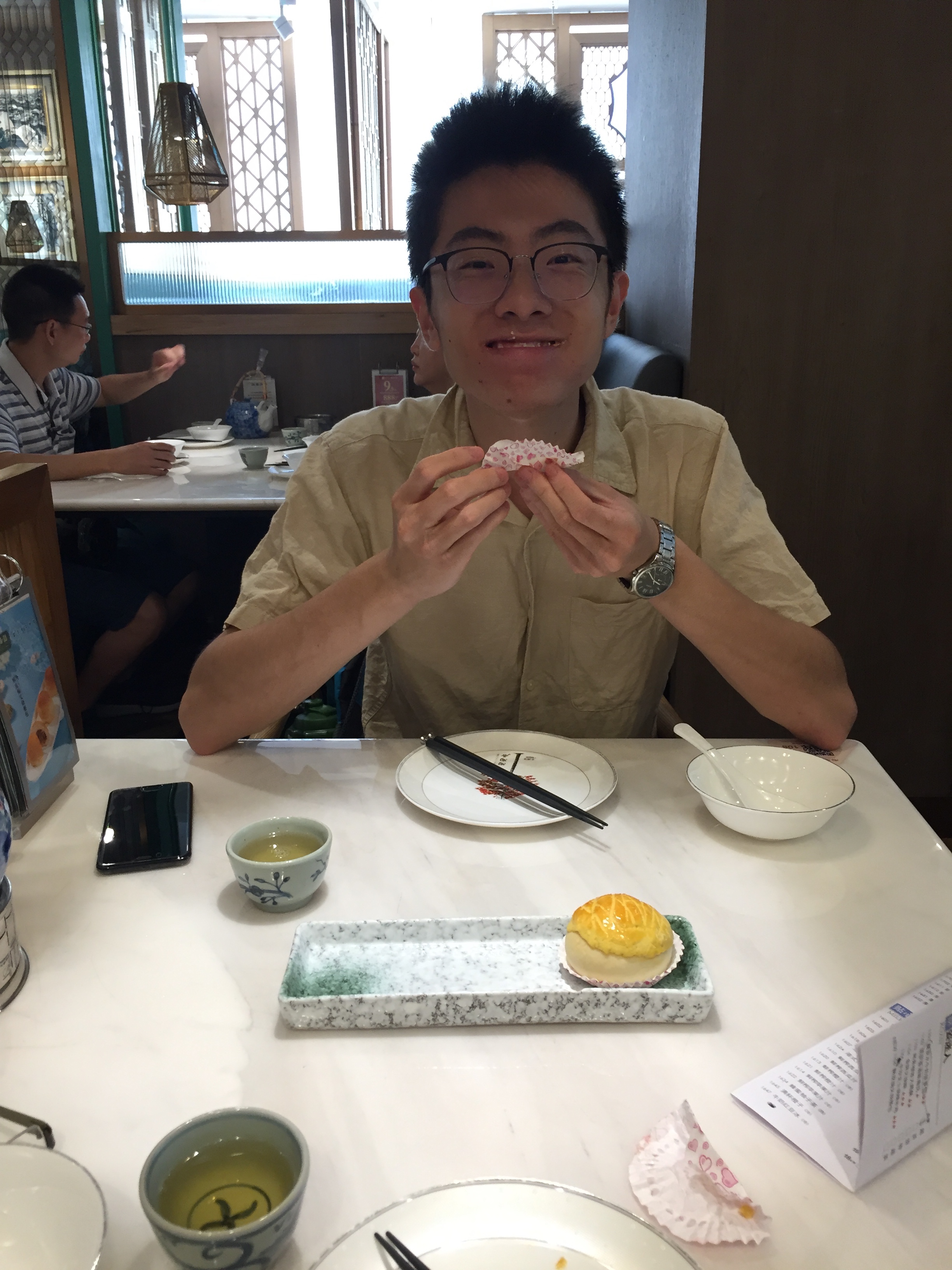
At 9 o’clock, it was time for morning tea. We went to Taotaoju, a famous morning-tea chain in Guangzhou, and had morning tea together. Morning tea is a Guangdong specialty. It counts as breakfast, but you can eat it for the whole morning. Many locals have morning tea every day, drinking tea and chatting there all morning. I really admire people who can spend a whole morning on morning tea, and I envy their leisure. I absolutely cannot sit that long, and I cannot afford to either. If I did not study or work every morning, I suspect I would soon be eliminated and starve. Morning tea mainly includes tea and dim sum. At the beginning they give you a small basin. Only later did I learn it is used to rinse the tableware. Washing plates, bowls, and chopsticks with scalding tea disinfects them and gives them the fragrance of tea. Tea can be refilled endlessly; otherwise how could people sit there all morning? The dim sum was truly delicious. This trip was worth it.
After morning tea, it was still early, so we went to Shamian Park in the south of the city. There are many concession-era buildings and remnants there. I really liked it. Many parents brought their children to play in the park, and the Western-style buildings also matched my taste. Each building has its own character because they were built by different countries. It reminded me of Tianjin’s concessions and old houses. There, by accident, we also entered a luxurious hotel, the White Swan. The buffet on the second floor left a deep impression on me. It was 385 per person, but because it was still the National Day holiday that day, it was 425 per person. We went in, looked around, and left. We can come back when we have money later. My deep impression of the place was not because the buffet was so luxurious or delicious, but because of its location. Outside the floor-to-ceiling windows was the Pearl River, giving the impression that the whole hotel was floating on the river. It satisfied my imagination of rich people’s luxurious lives. A hotel this expensive still had especially good business. Someone even booked the entire restaurant for a wedding. There are truly many rich people in China; poverty limits my imagination. Ordinary commoners like us should tighten our belts and just look.
At lunch, we went to an internet-famous shop, Wu Caiji Wonton Noodles. The location was extremely remote, but there were still many people, almost every seat was taken, and the wait was long. Fortunately, the taste was okay. I ordered fried wontons, but the wonton noodles Second Senior Brother ordered were only average. The south of the city is the old district, and “run-down” does not even begin to describe it; it had none of the atmosphere of a first-tier city. But after going to Tianhe District in the evening, I understood that Guangzhou deserves its first-tier status.
After lunch, we took the subway back to the hotel to rest. At 4 o’clock, we set off to visit Sun Yat-sen University, also jokingly called Shuangyashan University. Sun Yat-sen University’s campus is beautiful, and there were also many girls. One gate faces the Pearl River directly, and going upstream along the river leads to Canton Tower. We rode bikes along the river and across a bridge, and finally arrived at the most prosperous Tianhe District. There we experienced the luxury and corruption of capitalism, and from then on resolved to study hard and become successors of communism. In the evening, we ate chicken hot pot at an internet-famous shop in an underground mall. Then we planned to find a supermarket, buy some fruit and breakfast, and return to the hotel. Following navigation, we arrived at a nearby supermarket that looked nice. After entering, I was stunned: it was too expensive, unaffordable. Encouraged by Second Senior Brother, I splurged once and bought a small box of fingertip-sized watermelon worth 50 yuan. It was later proven that the tiny watermelon was extremely bad, and all of it was wasted. Throughout this trip, whenever Second Senior Brother talked about food, he always boasted that it was “super delicious.” Other than that, he had no adjectives. When I actually ate the food, I found that most things were average, though a few were indeed quite good. I am not a foodie and have no study or feeling for these things. Eating more would just be waste.
Macau
The itinerary for Hong Kong and Macau had been planned long ago, and it was precisely these two special administrative regions that attracted Second Senior Brother. Otherwise, he would not have come with me for Guangzhou alone. I applied for the Hong Kong and Macau Travel Permit one month in advance, and there were some small twists at the time. The Exit-Entry Administration Center’s website had been updated this year, but the new system had recently been down all the time. I do not know whether this was intentional or not, but it undoubtedly greatly increased the difficulty of citizens leaving the mainland. I could not wait for the system to be repaired, so I went to the Haidian exit-entry hall, which did not require an appointment, to apply for the permit. From application to receipt, including rest days, it took 14 days in total, which was reasonably efficient. Second Senior Brother applied after me. His method was to refresh the reservation system constantly; occasionally he could get in, complete the appointment, and apply directly at the Huayuan Road Police Station. He even got a two-entry endorsement. I only had a one-entry endorsement, but that was already enough.
The route to Macau is to take the Guangzhou-Zhuhai intercity high-speed train. It runs like a bus, once every 10 minutes, and is extremely convenient. After getting off at Zhuhai Station, Gongbei Port is right there, and you can cross the border on foot. On the Macau side, there is a parking lot with free shuttle buses from major casinos, making it convenient to go to Taipa and the Macau Peninsula. We randomly found a bus and left, eventually arriving at the Venetian.
Macau is famous for casinos. If Hong Kong’s status as a financial center faces competition from Guangzhou nearby and Shanghai farther away on the mainland, Macau’s advantage is truly unique. This trip to Macau was genuinely eye-opening.
We went to two casinos: the Venetian and Galaxy. In the morning at the Venetian, we won 130 HKD. At noon we went to Rua do Cunha to eat and drink, quickly spending all the money we had won. In the afternoon, still not fully satisfied, we went to another large casino, Galaxy. This time we lost 100 HKD and left dejected. Small gambling is amusing; big gambling harms the body. When I took the ticket to exchange 400 HKD (I had withdrawn 500 and lost 100), the two ordinary-looking uncles in front of me were exchanging chips. The result was several stacks of 1000-HKD bills about 10 cm thick, seemingly hundreds of thousands. You truly cannot judge people by appearance. Casinos are still places for rich people. Spending 100 yuan to experience it was enough for us. Our fate with Galaxy continued in the evening: when we planned to return to Gongbei Port, we took the bus in the wrong direction and ended up returning from the Macau Peninsula to Galaxy Casino in Taipa. So we simply had dinner at Galaxy (KFC; Second Senior Brother was almost sick of fast food these days), then took the casino bus back to Gongbei Port.
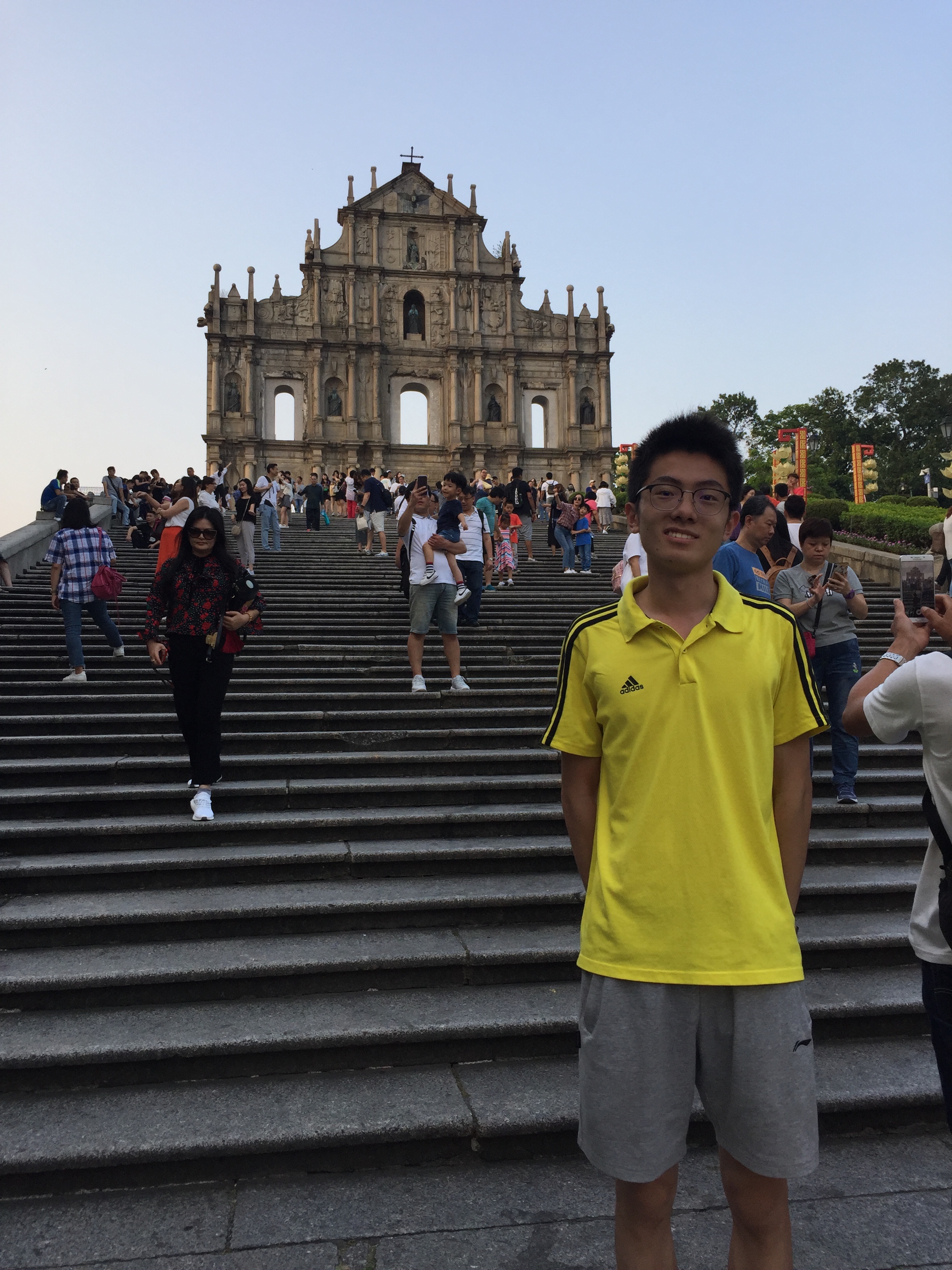
In the afternoon we also went to the Macau Peninsula, visited the famous Ruins of St. Paul’s, and walked around the nearby streets.
There are also many casinos there, including the old and new Lisboa. In the end, we restrained our urge to gamble. First, we had no money; second, we were already very tired and just wanted to find somewhere to rest. Gambling, pornography, and drugs really cannot be touched. It is too true. If you cannot control yourself at all, it is better not to get involved in the first place.
The Ruins of St. Paul’s are actually the front wall of an old church. The church was later destroyed by fire, leaving only this wall. It later became the symbol of Macau in history textbooks.
Hong Kong
Hong Kong is much larger than Macau, so we left the final two days for Hong Kong. This year, the Guangzhou-Hong Kong high-speed railway opened, with a train every half hour. Passengers only need to complete “one place, two inspections” at Hong Kong West Kowloon Station, which is very convenient. With the official opening of the Hong Kong-Zhuhai-Macao Bridge in October, intercity transportation in the Pearl River Delta will become even more convenient. On the evening of the 10th, we took the high-speed train to West Kowloon. After exiting the station, we could transfer to the MTR. Let me complain about Hong Kong’s MTR design. Unlike subway stations on the mainland, Hong Kong transfer stations are not just stations, but also malls. Line transfers are even more complicated: you have to weave through malls, and sometimes you even need to exit and re-enter the station, which is very inconvenient. The signs for transfers are clear enough, but one problem is that after you follow the signs to the right place, no sign tells you that you have arrived. On the other hand, station announcements are only made once between stations, and not announced again when arriving. Unlike mainland subways, which announce constantly and loudly tell you which station you have reached, as if afraid you will miss your stop. When we first arrived, we were totally confused, though we quickly adapted to these problems. Still, the user experience was terrible.
To save money, we booked a hotel that cost nearly 600 RMB per night, the Empire Hotel. As expected, cheap things are not good. The exterior, corridors, and service staff of Hong Kong hotels were all fine, but the room was extremely narrow and cramped, and the bedding was damp. After staying two days, we could not stand it; if we stayed longer, we would go crazy. I had long heard that “living in Hong Kong is not easy”, and now I finally had firsthand experience. Hong Kong is prosperous, but it is not suitable for everyday living.
The candy at the front desk was also terribly bad. Could they not put out nice mint candy like on the mainland? After all, the customers are all from the mainland!
On the first day, we mainly visited Disneyland, and in the evening we ate internet-famous beef brisket noodles. Disneyland may not compare with many amusement parks, including Ocean Park, which everyone keeps recommending. It is old and the smallest Disneyland in the world, but we still had a very happy day there. In that place, I did not need to think about life’s trivial matters or life planning. I only needed to play like a child. I had not felt that in a long time. Because it was a weekday, there were relatively few visitors in the park, and most attractions did not require queuing. People who come out to play on weekdays, besides idiots like us, are probably only rich second-generation parents bringing their children out. Many young couples really did not look poor. Poor people must all be working or studying hard right now!
On the second day, we focused on sightseeing at Victoria Peak and shopping. Early in the morning, we took the famous “ding ding tram” to the foot of Victoria Peak.
We bought a combo ticket for the uphill Peak Tram and Sky Terrace. The reason we did not buy a round-trip tram ticket was that the guide recommended taking a bus downhill to experience a different mode of transportation. The “tram” is called a tram, but it is completely different from the cable cars we ride on other mountains. It is more like a streetcar. But this streetcar is used to climb the mountain, and during the ascent the slope is basically very steep, sometimes reaching 45 degrees. It was a good experience.
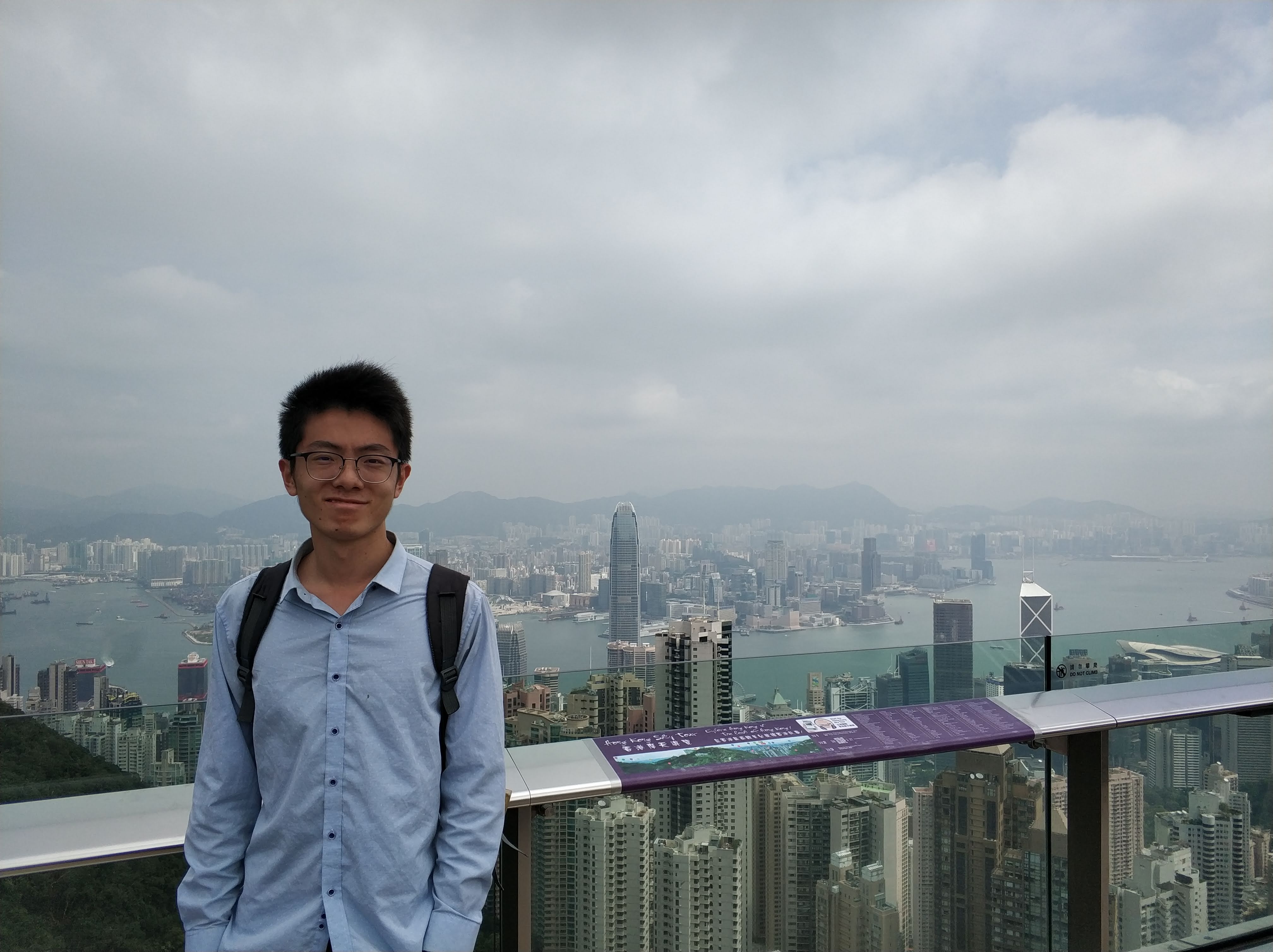
After reaching Sky Terrace at the top of Victoria Peak, you can overlook all of Hong Kong. The weather that day was especially good, with blue sky and white clouds. Hong Kong Island and the New Territories were all in view. ifc, Victoria Harbour, and all the other landmark buildings could be seen. It gave me the pleasure of pointing out the rivers and mountains and writing with passion. But looking from up there for about an hour is probably enough. It is still those buildings and scenery, and unless you change the time period, there is nothing new. Our time in Hong Kong was limited; otherwise, coming at dusk or at night to see the lights of Victoria Harbour would have been a very good choice.
Victoria Peak was also the southernmost place I had ever been.
Following the guide, we took a minibus. The driver sped along the winding mountain road, and from time to time it felt like a roller coaster. Honestly, Hong Kong drivers drive really fast; I just do not know whether they are faster than Hong Kong journalists. The advantage of taking the bus is that it can take you all the way to the ifc by Victoria Harbour, and our next destination was right there: the ifc Apple Store. Coming to Hong Kong to buy electronics, especially Apple phones and laptops, should be a good choice. The exchange rate plus tax advantages can save quite a bit of money. So this time the two of us left the border carrying two iPhone XS phones and one MacBook Pro.
In the afternoon, we took a ferry from ifc across the harbor to Harbour City in Tsim Sha Tsui for shopping. Second Senior Brother mainly wanted to buy some clothes and cosmetics there. Because we had been playing all day without resting, by the time we reached the huge mall we were both exhausted. Also, Harbour City’s store layout was very different from malls on the mainland, so we spent a lot of effort just finding stores and restaurants. On top of that, the clothes were not very cheap, and the Sony headphones I wanted to help Eldest Senior Brother buy were not even cheaper than on the mainland. We basically returned empty-handed, and the shopping was exhausting. By the end, whenever I entered a store, I would find somewhere to sit or lie down and wait for Second Senior Brother to finish shopping.
Harbour City is already quite close to West Kowloon High-Speed Rail Station, so we walked and browsed our way there. Then we took the high-speed train back to Guangzhou.
Back in Guangzhou, lying on the big bed at Guangdong Hotel, I felt that Guangzhou hotels were still better. At least the bedding was dry, and the room was much larger.
Beijing
On October 13, we took the high-speed train north along the Beijing-Guangzhou line and returned to the imperial capital. As soon as I returned to Beijing at 6 p.m., even while still on the subway, I felt completely different. I no longer had the playful, want-to-travel mood from being away. My whole body and mind had returned. My head was full of the work piled up during the week and the studies I had neglected. Thinking about it, since the Mid-Autumn Festival I had been letting myself go and had not studied properly for half a month. Second Senior Brother also admired me: I can be very wild outside, but once I return to Beijing, I can quickly get back into state.
I have never been someone who knows how to play well. During this trip, I received a lot of care from Second Senior Brother in many places. He handled many things. Occasionally when I tried to take charge and lead the way, I still led us wrong. I was born as someone who is not good at worrying about things, and because of this I often mess things up in study and life. Of course, this personality also has many advantages. For example, I can easily focus on one thing; I think less, and correspondingly have fewer worries. Everything is a double-edged sword. I accept myself like this, but I also try to find a balance. Although I am not good at worrying about things, when it is time to take responsibility, I still should.
Although I have already stayed in the imperial capital for four years, recently I have had a strong feeling: I will not settle here in the future. First, living in Beijing is not easy, and hukou restrictions are very strict. Second, the outside world is too tempting and has many opportunities. Where will I drift in the future? Whatever the final answer is, I hope it will be my own choice, and that wherever I am, I will live brilliantly.