Exchange Journey in Belgium
YoungForest · https://youngforest.github.io/en/2019/09/17/Beligum/
On this page · 4 sections
In the second half of this year, I was fortunate to have the opportunity to come to Belgium for an exchange semester, about five months.
This is my first time going abroad for such a long period. Previously I also participated in a school program and went to the United Kingdom for a half-month study tour. For details, you can read Thoughts and Observations from My Study Tour in Britain, which I wrote three years ago.
Next, I will summarize my exchange program from four aspects: city, life, study, and travel.

City
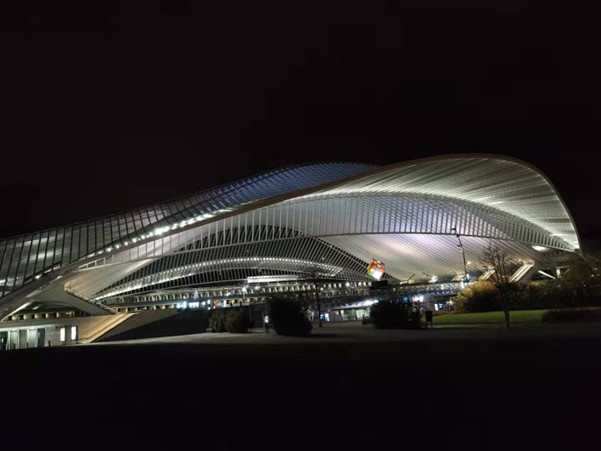
Liege is in the southeast of Belgium. It is also the capital of Liege Province, borders Luxembourg, the Netherlands, and Germany, and is the third largest city in the French-speaking region of Belgium. Many students who go to Europe for study worry a lot about local public safety and their own safety. However, Liege is a very safe city. In Europe, the smaller the city, the safer it tends to be. In places like Paris and Brussels, the probability of encountering danger may be higher by comparison. I once almost had my bag stolen in Brussels. In a small city like Liege, cars on the street will actively yield to pedestrians. Sometimes an entire bus waits for me to cross the road, and I feel a little embarrassed, so I speed up my steps. Although aging in Europe is very serious, Liege is a university city, so that feeling is not obvious. There are still many young people, and the whole city is full of vitality.
Life
The pace of life in Western Europe is very slow. On one hand, because of the high latitude, it gets dark very early in Liege; on the other hand, Europeans have less pressure in life and care a lot about work-life balance. Most stores close at 6 p.m., public service facilities basically close at 5 p.m., and supermarkets close at 8 p.m. When I had just come from the domestic 996 lifestyle, I felt somewhat unused to it, and after returning I felt the same in reverse.
The cost of living in Belgium is still relatively high in Europe. In Europe, the farther north and west a region is, the richer it is and the higher the cost of living. To maintain the minimum standard of living, you need about 700 euros per month. If you want to live a bit better and go out traveling sometimes, you need about 1000 euros per month.
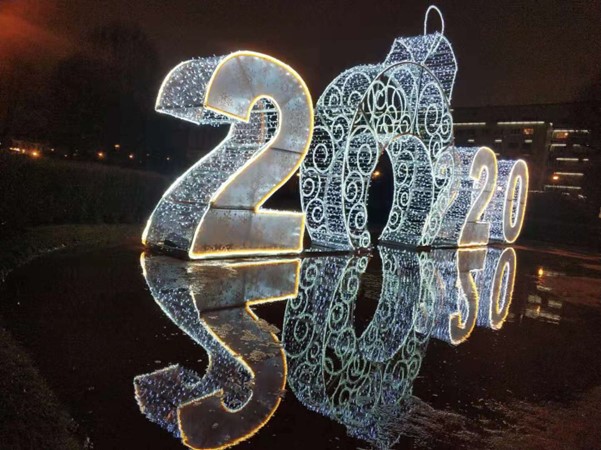
Western European weather in winter is dominated by continuous cloudy and rainy days. It is common not to see the sun for half a month, and it really affects one’s mood.
Study
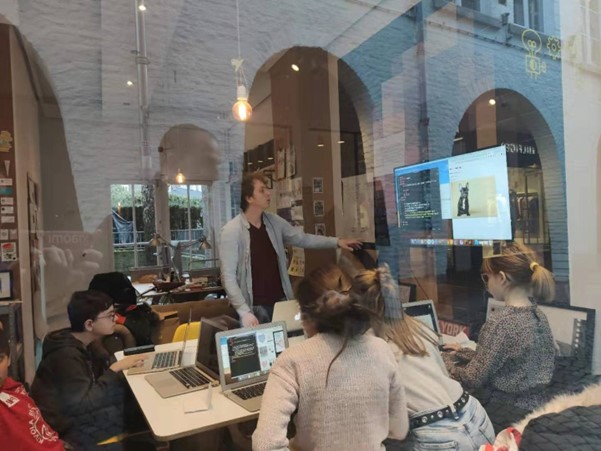
I studied computer science courses. At the University of Liege, they belong to the Faculty of Applied Sciences, and all courses were arranged on a hill in the south of the city. For convenience in daily life, like most students, I chose to live in the city. Every day I commuted to class by taking a 40-minute bus up the hill. The overall difficulty of the courses was not high, but the amount of knowledge was large, and the teaching was in English, so a lot of time needed to be invested. What impressed me most was that almost all classes and exams here lasted four hours, though classes sometimes ended early. Such long classes are a major test of concentration. After every class, I felt exhausted.
Travel
As the headquarters of the European Union and a transportation hub of Europe, Brussels in Belgium has very cheap flights to other countries. You can often find low-cost flights for 10 euros, carry a backpack, and go on a trip at a moment’s notice. It can be said that Belgium is closely connected with Europe. Europe, as the origin of the modern Industrial Revolution and the base of Western powers, has collected many treasures from all over the world. Among them, the Louvre and the British Museum are the leading examples. Like China, Liege also has some public holidays. In addition to Belgian holidays, there is also a special day off for the French-speaking region. Using these holidays, we traveled extensively in Europe, greatly expanding our horizons and experience. After studying for more than twenty years, I finally had the chance to travel thousands of miles.