Studying in Europe: A Chat About Banks and Money
YoungForest · https://youngforest.github.io/en/2019/12/07/Europe-bank-accounts/
On this page · 13 sections
This semester I was lucky enough to come to Belgium as an exchange student for one semester. I ran into quite a few difficulties around “money”, and gradually worked through them with help from classmates. Here I want to thank the friends who helped me, and also share my own experience so that more people can benefit from it.

In today’s globalized world, when you come to Europe, how to spend money conveniently and save money at the same time is something every international student cares about. Spending money in Europe can basically be divided into two categories: cash and card payment. The two complement each other. It is not like in China, where one phone can take you everywhere.
My own experience was: I exchanged 700 euros in cash in China and brought it with me, and I also brought a China Merchants Bank Visa all-currency credit card. Because the visa application required proof of funds, I had also transferred more than 3,000 euros to the school’s account in advance. After that, the school returned 666 euros to my account every month as living expenses. After arriving, I opened an ING Green Account, tried online banks including Revolut, Curve, Bunq, and Monese, and set up Google Pay and PayPal. After traveling around Europe independently and combining different payment methods, I found a way to make spending both convenient and economical.
Next, I will introduce how to apply for each method, along with their pros and cons.
Cash and Card Payment
When you first arrive in Belgium, it is necessary to bring enough cash from China. It also gives you some peace of mind. I brought 700 euros, and it turned out to be more than enough when backed by a credit card. Belgium, as one of the more developed regions in Europe, supports card payment in most consumption scenarios. Even some large payments, such as rent, must be paid by card. Luckily, my credit card limit was high enough. When paying rent for the first time, I even needed to help pay for two classmates traveling with me. This is where the advantage of bringing a credit card abroad really showed.
Cash
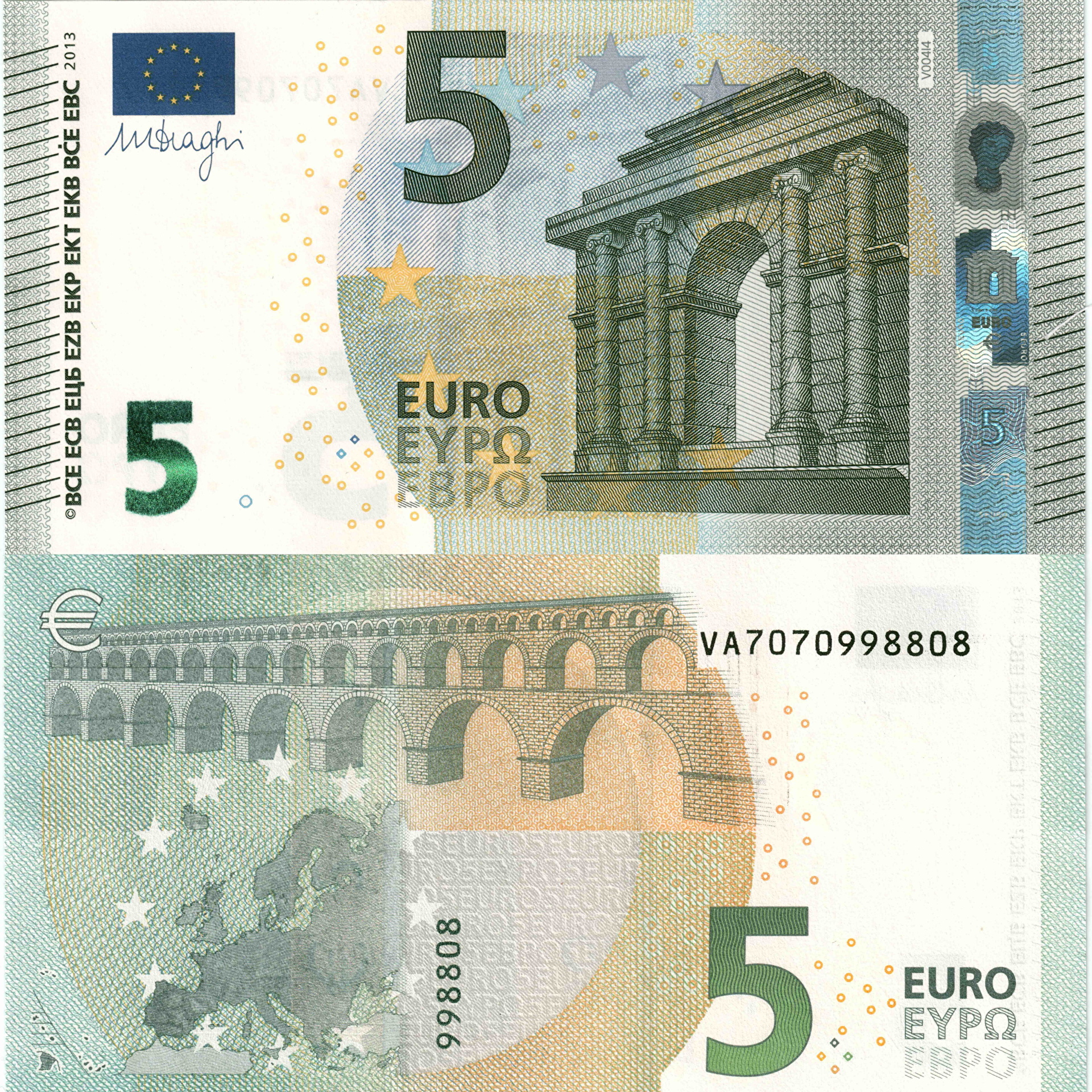
In Europe, it is necessary to carry a small amount of cash. This is especially true for 50-cent coins, because many public toilets here charge a fee, most of them 50 cents. This is literally emergency money. I suggest bringing more 5-euro bills. The larger the denomination, the less useful and less convenient it becomes. In some consumption scenarios, such as markets and street stalls, cash is also the only option. In some relatively less developed parts of Europe, such as Greece and Italy, there are also more places where card payment is not accepted. Western and Northern Europe are much better. In Denmark, you can even pay by card to use the toilet.
Credit Card
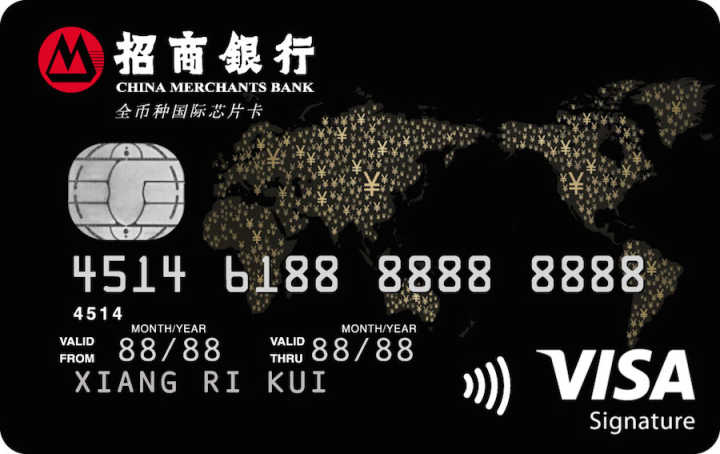
The biggest advantage of a credit card is convenience. It supports all currencies, and repayment is in RMB. Repayment can be made by directly transferring money to the credit card, so parents in China can also repay it very conveniently. China Merchants Bank also reminds you, based on your consumption location, that you can increase your temporary limit to meet the demand for large overseas payments. It is also relatively easy for students to get a card from China Merchants Bank, and the credit limit is not bad.
The drawbacks are:
- It is not economical enough. You can check the specific exchange rate on kylc. The repayment strategy of China Merchants Bank credit cards is: when you spend in a currency other than USD, the amount is first converted into USD according to Visa’s exchange rate and posted to the account. Two days later, it is then converted into RMB according to China Merchants Bank’s exchange rate. Although there is no so-called dynamic currency conversion fee (DCC), the exchange rate from China Merchants Bank is actually not good, especially compared with Bank of China. Compared with the online banks introduced below, or private currency exchange, it is also not very economical.
- It is easy to spend too much. This is a common problem with credit cards, and it is the same in China. Only when the monthly bill comes out and it is time to repay do you realize that you somehow spent this much money.
If anyone wants to apply for this card, you can find a classmate who already has one to refer you. That way both people can get pretty nice gifts.
Traditional Bank: ING
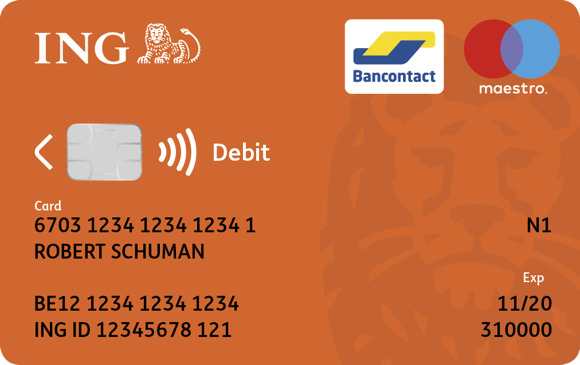
Because we needed the school to return living expenses to us, we had to open an account. Most banks require a residence card to open an account. Only ING allowed us to open one with a temporary residence certificate, namely the Annex 15 document. I opened a Green Account with an annual fee of 40 euros, charged as 10 euros every three months. Later I heard that there is a more affordable Lion Account, aimed at young people under 25, and it even gives you 40 euros.
To open a card at ING, you need to make an appointment first and then open the account. From beginning to end, it takes a little over two weeks to receive the card. After receiving the card, if you want to use online banking or mobile banking, you also need a Reader, something similar to a U-shield (USB security token). In theory, this Reader should be mailed to you together with the card. But none of us received it, so later we specifically applied again on the official website, and got it about three days later.
An ING card gives you a Belgian account and a card.
The account can be used to receive money and transfer money. Transfers within the same bank usually arrive instantly, while interbank transfers take one working day. This account can also be linked to PayPal for online payment.
The card supports Maestro and Bancontact payments. Both payment channels are relatively limited and cannot compare with Visa or MasterCard. Bancontact in particular is a payment channel controlled by a Belgian company, and basically cannot be used once you leave Belgium. Bancontact also supports mobile and online payment, but it is basically only Belgian companies and websites that use it. Also, this card has no CVV, which means it cannot be used in many online payment scenarios.
ING card transactions are also not notified in real time. You need to wait a few working days. So when spending money, you cannot immediately know how much was deducted. As a Chinese person I may feel uneasy about this, but people here seem used to this payment style, and overcharging does not seem to happen.
My usual approach is to keep the larger amount of money in the ING account, and transfer small amounts to other online bank accounts for daily spending.
Another drawback of ING is that its currency exchange rate is relatively poor, probably about 10% worse than the market rate. You also need to make an appointment in advance. Online appointments take seven working days and allow you to specify denominations. Offline appointments are faster, about three working days, but do not allow you to specify denominations, which is very inconvenient. I once exchanged Hungarian forints and came back with nine 10,000-forint notes. In fact, that was only equivalent to around 300 euros.
Online Banks
Europe is the birthplace of banking. The banking industry is very developed, and the financial and economic systems are quite mature. Besides traditional banks, there are also many online banks. These online banks solve many pain points of traditional banks:
- high fees
- low efficiency
- inconvenience
- delayed balance-change notifications
Recommended by Taiwanese friend Benjemin and through my own exploration, I tried four online banks. Their features and the needs they solve are different. If you have travel needs or online consumption needs, you should definitely try them. You will find that life in Europe is actually quite convenient.
- Revolut
- Curve
- Bunq
- Monese
The authentication process for these online banks is more or less similar. They all require you to upload proof that you live in Europe. This can be passport + visa, or a residence card. From my experience, using a residence card makes review easier to pass.
Revolut
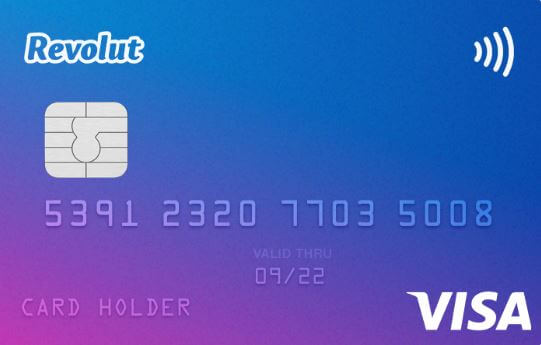
This is the most well-known online bank. It gives you a UK account, supports multiple currencies, and uses a very economical interbank rate when exchanging between currencies. You can order one physical card and multiple virtual cards for free.
I opened one physical card and one virtual card.
The virtual card can be used for online payment, linked to Google Pay and PayPal, and linked to Curve. It works especially well when combined with Curve.
The physical card will be mailed to you. It takes about two weeks, and using it is no different from using an ordinary card.
A physical card carries the risk of being lost or stolen. My card was swallowed by an ATM when I withdrew cash in Istanbul. Fortunately, online banks let you freeze and report a card lost immediately, so it did not cause any bigger loss. I immediately ordered a second physical card, but the second card costs about two euros.
Revolut is my main online bank. I usually transfer money from ING to Revolut and keep its balance around 100 to 200 euros. I carry the physical card with me for convenient spending. The virtual card is linked to Google Pay, PayPal, and Curve to maximize its usefulness.
When traveling to non-euro areas, I exchange currency in the app in advance and then withdraw cash from an ATM at the airport. There may be a withdrawal fee of around 3.5%, but it saves the dynamic currency conversion fee (DCC), and is still much better than exchanging money through ING or at the airport.
Its outstanding advantages are:
- quick card approval and convenient account opening
- real-time balance-change notifications
- relatively good exchange rate
- support for virtual cards with CVV
N26
N26 is a German online bank, similar to Revolut. It gives you a German account, supports spending in multiple currencies, and uses an economical interbank rate.
The virtual card is free and can be linked to Google Pay for spending.
The physical card requires a 10-euro shipping fee. I did not apply for one, and instead paid for a Revolut card. In most cases, Google Pay is enough. A physical card is just for extreme cases where your phone runs out of battery.
Curve
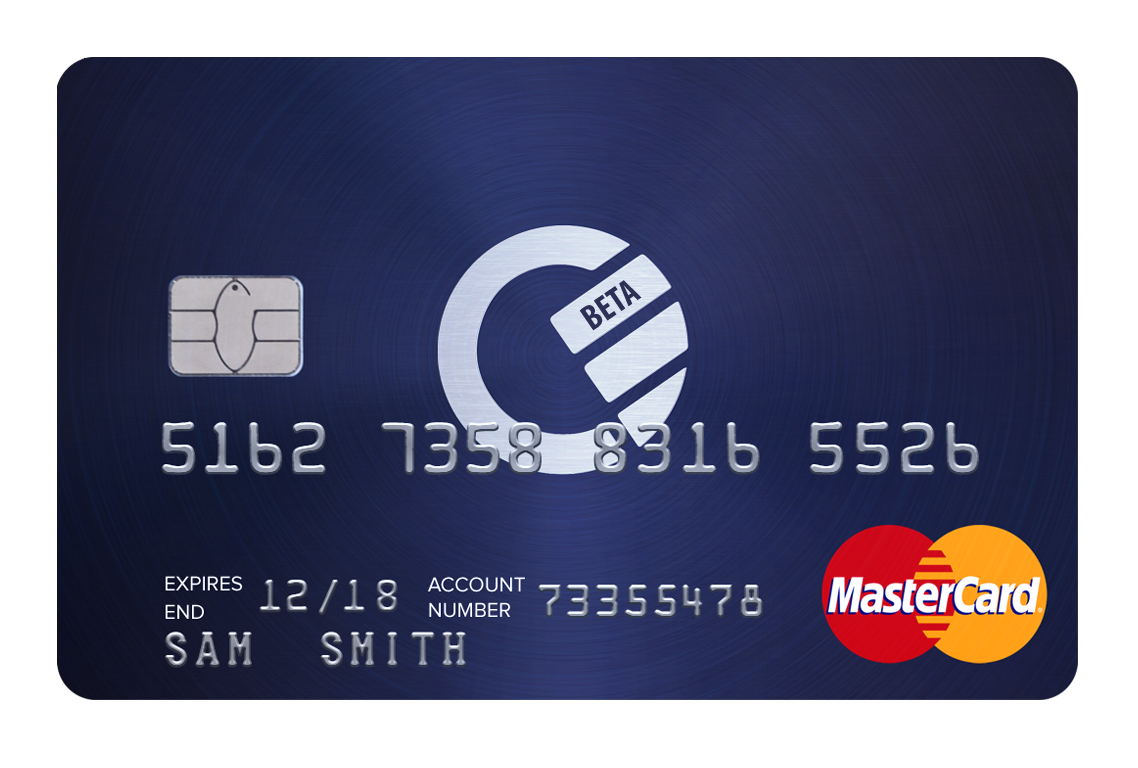
Curve is also a UK online bank. Its main feature is aggregating multiple bank cards into one card, and helping avoid currency conversion fees.
This is also my second main card. The UK really is a financial center and a pioneer in online banking.
The way it works is: after your application is approved, it sends you a MasterCard debit card. But there is no real bank account. You can bind multiple cards from other banks in the app, as long as they have a CVV. When you pay by card, the card that is actually charged is the one behind it. The Curve card is essentially acting as a proxy.
Students who have studied the Proxy Pattern in design patterns should all know that once we have this layer of proxy, we can do a lot of things. For example:
- Waive currency conversion fees. When spending in a foreign currency, use Curve to handle the currency exchange. The actual currency deducted from the card behind it is the original currency of that card. In other words, the currency exchange operation is moved to Curve. Curve also uses a very good interbank rate. One thing to note: do not use the currency exchange feature on weekends. The London currency market is closed on weekends, which creates a 0.5% to 1.5% currency conversion fee.
- Disguise a credit card as a debit card. Credit cards have many advantages. In a small number of scenarios that require credit, debit cards cannot be used, such as car rental or guarantee payments on booking. But there are also some scenarios where only debit cards can be used. I have not encountered this yet, though in China I often run into places where Huabei cannot be used when paying through Alipay. In this case, you can swipe the Curve card, while the card actually charged is a credit card.
- Carry only one card when going out. This is also its killer feature. In modern society, many people have multiple bank cards and need different cards in different scenarios. With Curve, you only need to switch cards in the app.
The drawback is that it currently does not support Google Pay in Europe. So it cannot be combined with Google Pay to do even more fancy operations.
Referral code, which can give you 5 pounds:
I’m using @imaginecurve! All my cards in one + a great way to save & manage money. Sign up with code DL6LOLZE & get £5 https://curve.page.link/HyuYB
Bunq
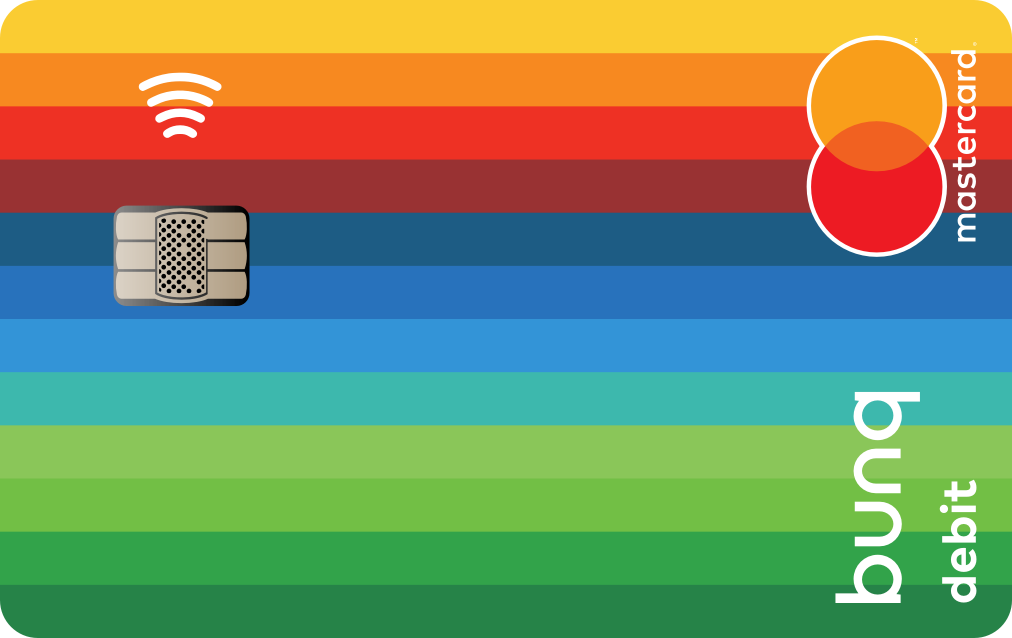
This is a Dutch bank. It gives you a bank card, the rainbow card, and a Dutch bank account. Its main selling point is also eliminating currency conversion fees when traveling. A Dutch account can also do more things, such as enabling iDEAL Payment, which is the Dutch version of Bancontact. Some Dutch companies and websites give discounts for using this payment method.
Another killer feature of this account is that it can top up from a credit card, which is what we often call cashing out. Combined with a credit card, it can support various asset operations, such as expanding cash flow.
Monese
This is also a UK online bank. It gives you a UK account and a bank card.
Its advantages are similar to other online banks. I have used it relatively little and explored it only lightly.
The drawback is that it only has GBP and EUR accounts.
Payment Methods
Besides common card payment, two other payment methods are also popular in Europe:
- Google Pay
- PayPal
Some of their functions are a bit like Alipay.
Google Pay
It supports offline contactless payment and online payment, usually through a phone.
Because Android phones bought in China generally have Google services removed, whether you can use it still depends on your specific phone model.
I use a Xiaomi 9. After some configuration, it can use Google Pay normally.
You only need to change the system’s default wallet from “Mi Wallet” to “HCE Wallet”.
Paying offline with a phone is truly extremely convenient. You do not need to take out a card, or even unlock the phone. It is more convenient than scanning a QR code or showing a payment code in China.
Besides this, Google Pay can also integrate various membership cards. Here in Europe, just like in China, many supermarkets issue membership cards with points and discounts. You can use Google Pay to save the membership card’s barcode or QR code, and easily pull it out when paying. This reduces the hassle of keeping and taking out physical cards.
PayPal
PayPal mainly solves online payment problems. In Europe, when buying a plane ticket or booking a hotel, besides direct card payment, many services support PayPal, and some only support PayPal. PayPal can be linked to an ING bank account and online bank cards, and it can also be linked to a credit card. It is very similar to Alipay. Besides making online payment convenient, it also has an advantage in exchange rates. When the payment currency is different from the currency in your card, you can choose to let PayPal handle the exchange directly, and the rate may be better than the bank’s rate.