Essential Life Guide for Newcomers to Ireland
YoungForest · https://youngforest.github.io/en/2022/11/11/Ireland-Onboarding/
It has been two weeks since I successfully moved to Ireland. Because I have been busy handling all kinds of things since arriving, life has slowly begun to get on track. Starting today, I will gradually share some guides for the early stage of working or studying in Ireland. On one hand, I have stepped into many pits myself; on the other hand, now I have finally succeeded at some things, so I have a bit of experience that can help everyone.

Part 1: SIM Card
When newly arriving abroad, getting an Irish SIM card is often the first thing everyone needs to do.
- Access cellular network, meaning mobile data. Although domestic Chinese SIM cards can access the internet through roaming, first, it is relatively expensive at 25 CNY per day; second, it cannot access the outside internet, so commonly used services here such as Google Maps and Google Search cannot be used without a VPN.
- Many places for handling documents or registering accounts cannot use foreign numbers, such as bank cards, WhatsApp for local communication (similar to WeChat), and residence cards.
- Calling local people. When newly arrived, there are many local people to contact, such as the pickup driver, temporary-accommodation landlord, school or company contacts. Having a local phone number is much more convenient and affordable.
After stating so many reasons why an Irish SIM card is necessary, how should one get one?
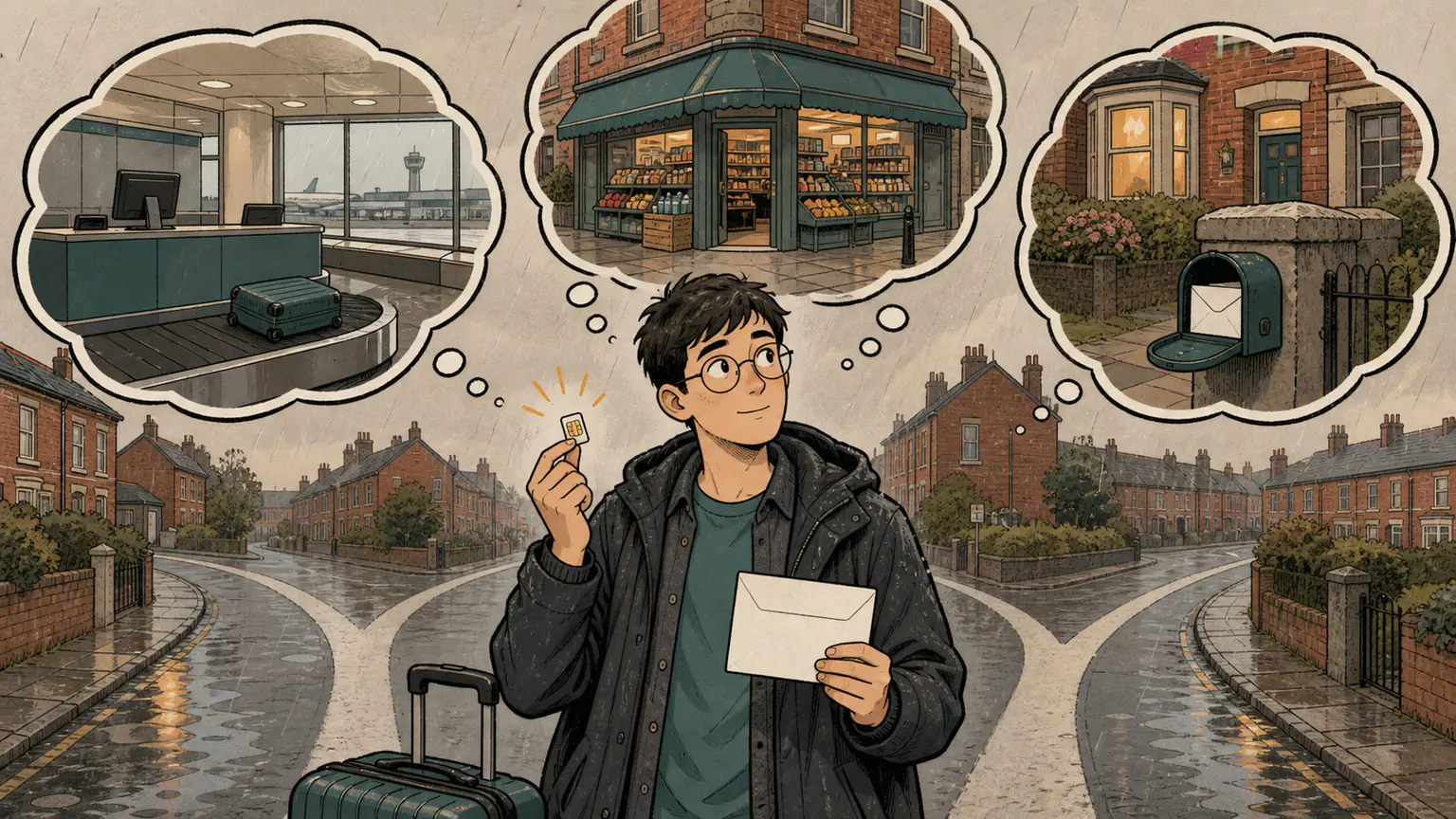
Generally there are three places to get a SIM card:
- Airport. In the arrivals hall at the airport, there are many services for foreigners, including currency exchange, transportation from the airport to the city center, and SIM cards. The advantage of getting a card at the airport is that you can get the SIM immediately. The disadvantage is that it is generally more expensive, the plans are not cost-effective, and the available choices are relatively limited.
- Offline stores. These include carrier stores, newsagents that also sell SIM cards, and some supermarkets. The advantage is more choice. The disadvantage is a relatively narrow time window, basically 9 a.m. to 6 p.m.; transportation cost is high and inconvenient, especially if your temporary accommodation is in the suburbs, which is very likely.
- Online websites. The advantages are the most choices, cheap prices, and convenience. The disadvantages are that you need an address and need to wait about two days to receive mail, meaning the SIM card.
Everyone can choose the suitable method according to their own needs and preferences.
Another issue people care about is which carrier to choose. I will introduce several popular brands in Ireland, their characteristics, and the monthly price of mainstream plans for reference.
- Vodafone. Ireland’s largest carrier, with relatively reliable signal. 20 euros.
- Tesco Mobile. Its main business is supermarkets, with many stores. You can buy it in supermarkets or online. 20 euros.
- GoMo. Online-only brand, cheap. 15 euros.
- lycamobile. Online-only brand, the cheapest. 10 euros for the first 12 months.
I personally chose the cheapest Lyca in the end. It is cheap, but I encountered two big pits.
- Mail was slow to arrive. It took a full week. The official website promised two days, but this also has to do with where you live. I feel it was the fault of the apartment I lived in; mail seemed to be distributed to you only once a week.
- Internet setup is complicated. If the configuration is wrong, it will charge randomly. I was trapped for nearly 5 euros. The specific configuration method is: 1. Follow the instructions in the order email. First dial
*116*PIN#; your PIN can be found in the email. 2. Then follow the second step of this official instruction to enable roaming and configure APN (Name: lyca internet, APN: data.lycamobile.ie, Username: lmie, Password: plus). Only after that can you access the internet normally.
Choose a carrier according to your budget and preferences.