Deep Simplicity: Chaos, Complexity and the Emergence of Life
YoungForest · https://youngforest.github.io/en/2024/09/15/Chaos-Complexity-and-the-Emergence-of-Life/
Weekly book 22: Deep Simplicity: Chaos, Complexity and the Emergence of Life
A book recommended by Poor Charlie’s Almanack. It understands the universe, life, and society from the perspective of chaos, which is a very interesting angle. Through chaos, a mathematical concept, the book strings together many things in the universe. Although we have a lot of physics knowledge and seem to understand the world quite well, enough to predict history and the future as Laplace believed, facts and theory prove that this is impossible. The best and only solution for computing the universe is the universe itself. It is impossible to create a machine or life inside the universe that can compute and predict the universe. This is a mathematical limitation. If, as many sages have said, mathematics is the language of God, then it seems this language also has innate limits and is not omniscient or omnipotent. Of course, mathematics has always been progressing, but judging from current proofs, many equations do not have analytical solutions. Iterative solutions are destined to encounter the butterfly effect. It is slightly worse than A Matter of Degrees. Although I think I have some mathematical and scientific background, the mathematics and arguments in this book still left me somewhat confused.
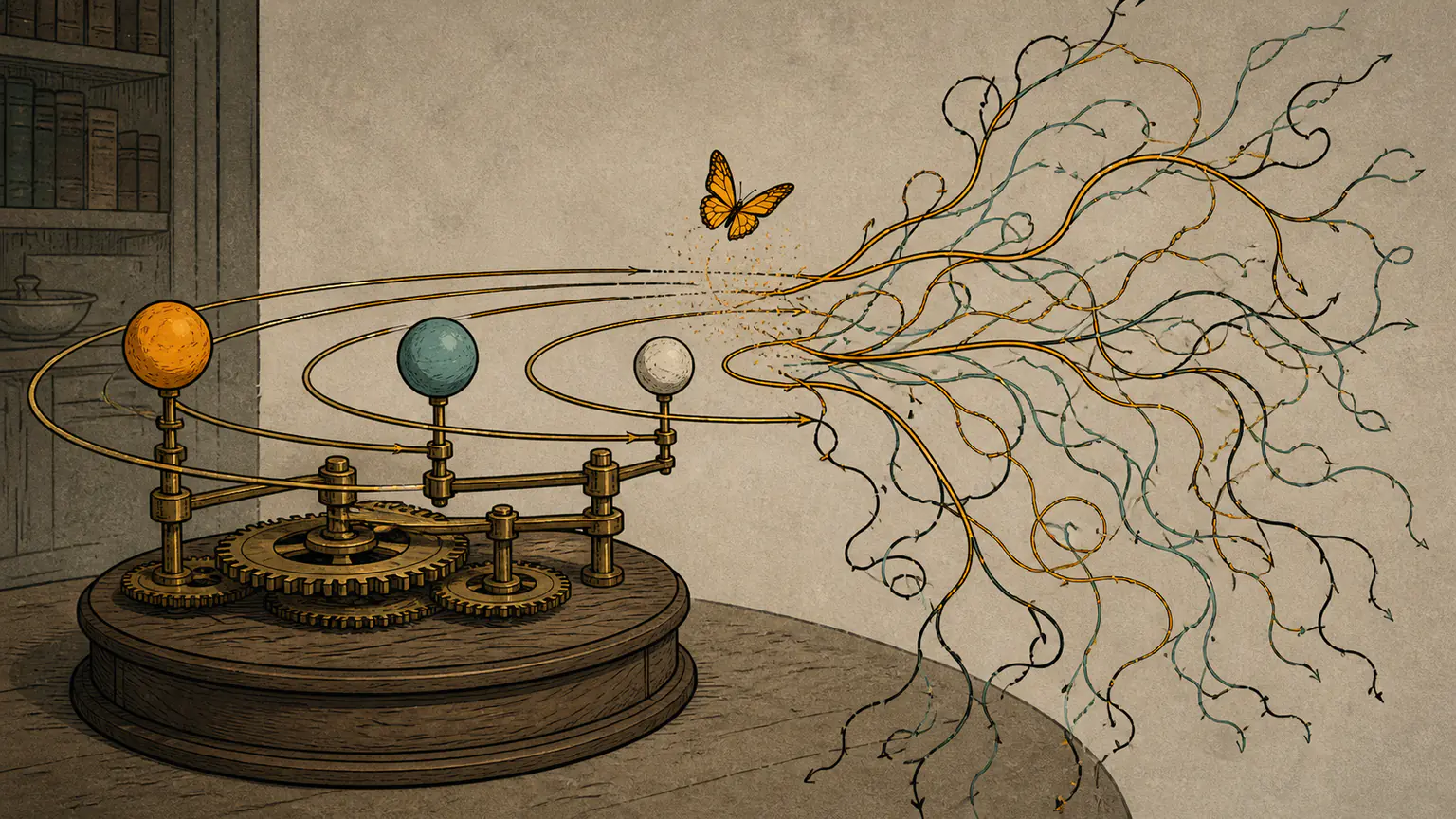
Interestingly, the previous book mentioned a solution similar to The Wandering Earth. This book begins with the three-body problem. The three-body problem is unsolvable, not because physics is wrong, but because mathematics is at fault, and mathematics has already proved that it is unsolvable. Therefore, if the Salvationists in Remembrance of Earth’s Past had read this work, they would have given up the idea of saving the “Lord.” Of course, in The Three-Body Problem, the Salvationists eventually proved this point as well, and failed in the struggle against the Adventists. One can say their strategy was impossible from the root and doomed to fail.