The Hungry Golden Age: The Gains and Losses of the Qianlong Era
YoungForest · https://youngforest.github.io/en/2026/01/01/The-Gains-and-Losses-of-Emperor-Qianlong-Reign/
The prelude to a golden age is decline, and its ending is also decline
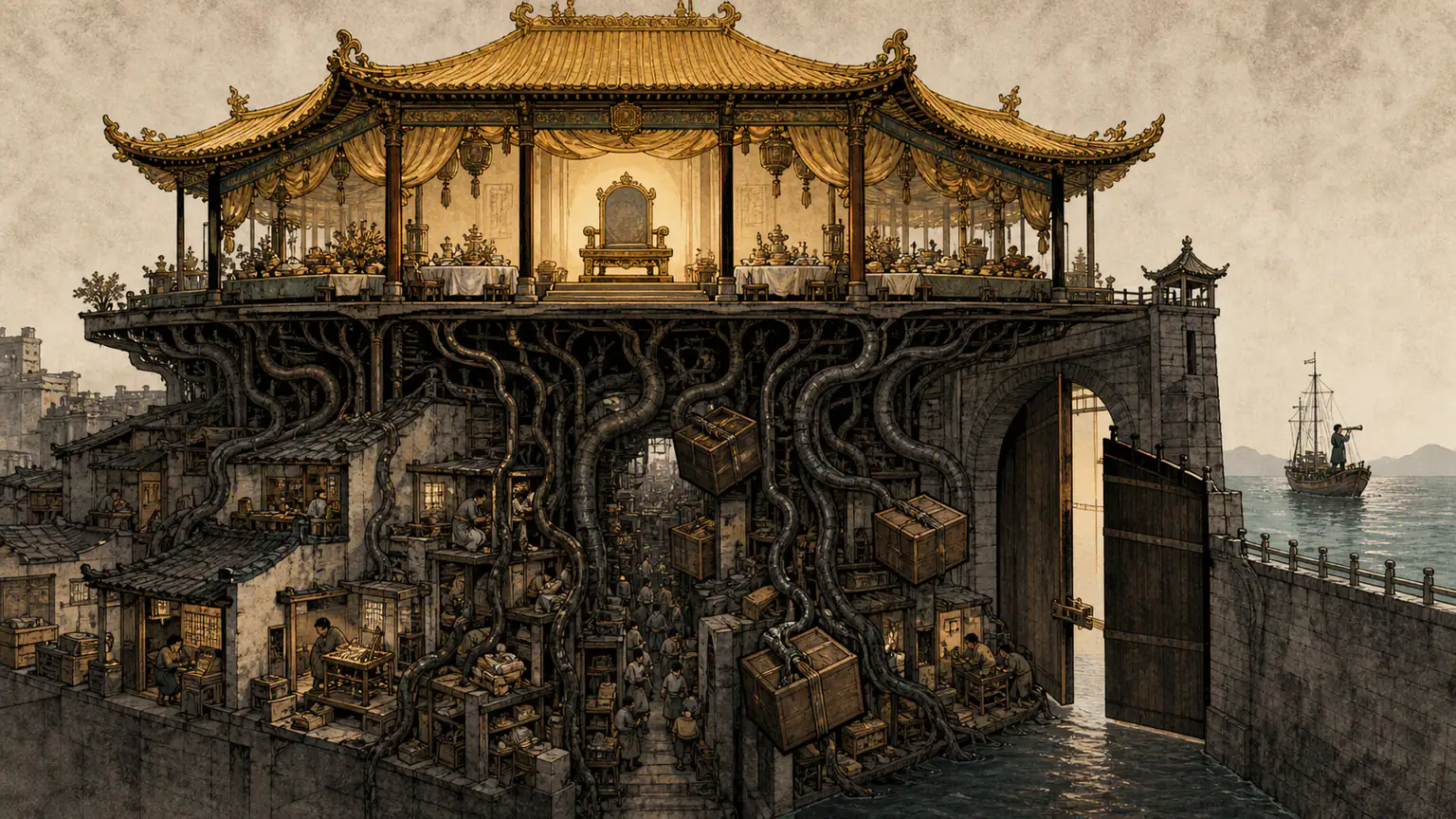
Imperial power is like a malignant tumor, one of the most expansionary things in the world. It does not allow independent people or independent affairs to exist. The exclusive nature of autocratic power drives it to forever strive to break through all limits, throw off all restraints, penetrate every corner of society, poison every cell, and finally suffocate the entire society in its tight embrace. The scholar’s pursuit of personal dignity became an obstacle to imperial power in the Qing dynasty, when autocracy reached its peak.
The British recognized that private property rights are a basic element of human civilization and the cornerstone of a free society. Locke said that property rights have a direct relationship with individual freedom. Property rights are not a relationship between things, but a moral relationship, a social relationship involving the stability of expectations and connected with causality. Without them, people’s expectations in social life would be impossible.
Written in 2022, using the past to satirize the present. This author has admirable courage. After finishing it, I fully understood the phrase “entering the brain, entering the heart, entering the soul”. The way of autocratic rule has always been like this.
The prelude to a golden age is decline, and its ending is also decline.
Indeed, as many critics have said, many foreign-related historical facts in the book are actually stories, such as the struggle between the German king and the miller, and even content from Marco Polo’s travels. The mainstream view in today’s historiography is that he never truly came to China.
As the protagonist of the preface and the second half of the book, I had known about the Macartney Embassy to China before, but I did not understand the details, causes and consequences, especially the British perspective and feelings. This book completed my understanding of the Western side of this important historical moment. The final chapter, “The Empire’s Genetic Code”, talks about what Alain Peyrefitte saw and heard during his 1960 trip to China after China had once again closed itself off from the world. The society he described was very similar to the one described by Macartney.
“The Chinese people of 1960 still agreed with Qianlong’s view of the Macartney Embassy. History textbooks, university course books, and the intellectuals I spoke with all used Marxist language to support the traditional view. Macartney’s attitude was ‘imperialist’, ‘capitalist’, and ‘colonialist’. Mao had done the same not long before when he repatriated Soviet technicians and advisers. At the time he declared: ‘We must rely on ourselves.’”